Thursday, March 17, 2016


 Global Health Educators 
 Program Report from Uganda Trip - Spring 2016
The Nile River, Murchison Falls, Uganda
Travelers:  Mark Gustafson MD, MPH, Judy Gustafson MD, MPH, James Drougas MD, Raven Sullivan, and Brooke Parker

Vision:
Improve women and newborn health in the developing world. 
Mission:
Improve the health of communities through educational teaching programs and sustainable interventions.   
Goals:
• Improve maternal and newborn health.
• Strengthen medical care at the level of the health center.
• Improve community health through educational and sustainable interventions.

Below is just a brief report on what we tried to accomplish during our most recent visit.  Our intent for this trip was to evaluate programs that have been initiated on previous trips and present just a couple new topics that were specifically requested by the Ugandan medical staff and community leaders during our last visit in October 2015.  

Magale Health Center Level 4 - Health System Strengthening 

Dr. Drougas (right) working with Dr. Lukia in Magale, Uganda
Surgical and Anesthesia Mentoring: Dr. Sr. Maria Goretti was transferred to Tororo to act as administrator to multiple health centers with Dr. Lukia now acting as the new physician for  Magale HC4. Dr. Lukia  assisted Dr. James Drougas and Dr. Mark Gustafson in multiple surgical cases that were chosen to help improve her surgical skills including Ob/Gyn and general surgical cases.


Skills Training Workshop for Medical Staff: 
A hands-on workshop was conducted with new training topics including suturing, airway management, spinal anesthesia, and IV placement.  Clinical health officers, midwives, and medical staff from several health centers attended these training programs.  

Ursula, midwife, teaching patients
and family about temperature monitoring
Newborn Warming:  The program was initiated by the PA Students from Jefferson College of Health Sciences in October 2015.  Upon return the midwives were continuing to monitor newborns for hypothermia although they had run out of thermospots (stick-on crystalline thermometers).  The midwives will continue with the thermospots donated from VT and temperature monitoring charts posted on the walls near each patient bed.  

Virginia Tech Engineering Students’ “Baby Pod” Evaluation:
The engineering students at VT in Blacksburg, VA requested an evaluation of their  “Baby Pod,” a simple device designed to prevent heat loss that could be made with local resources.  A prototype was taken along with staff surveys to determine acceptance and feasibility in a low resource setting.   Of the 10 midwives who attended the trainings, all provided comments and positive feedback and hope to incorporate this type of device for their newborns at risk for hypothermia.   


Continuing Medical Education:  New topics were introduced including management of wounds, hand hygiene, and an exclusive breastfeeding program for a minimum of 6 months.  Although mothers breastfeed their infants, there are many superstitions and misunderstandings leading to supplementation with contaminated water resulting in early newborn diseases and death.  Time was spent trying to understand the cultural challenges facing mothers and the ability to implement an exclusive breast feeding program as recommended by the WHO and the Ugandan Government. 

Ultrasound Training:  Demonstrations and teaching programs were presented to the staff.  An ultrasound machine was then presented to Magale Health Center to assist with diagnostic imaging.  Sister Aligonda is the new acting head of the medical staff and will continue these training programs as well as assure the safety of the Sonosite ultrasound machine.  Appreciation goes to all who donated toward the purchase/renovation of two ultrasound machines through the Sonosite Soundcaring program.


Antenatal Clinic:   Prior to delivery, four antenatal visits are recommended by the Ugandan government.  To encourage mothers to attend these clinics, “Mama Kits” were given to mothers who were near delivery and had attended all 4 antenatal visits at St. Angela’s HC4 in Magale, and Gamatui HC2 in Sipi Falls.  Pictoral teaching materials developed by GHE were given to the clinic staff and the “Mama Kits” were donated by mercyformamas.com.  GHE is hoping to work in collaboration with “Mercy for Mamas” to improve maternal  and infant care. 
      

 Community Health Programs - Manafwa District 
 Bubulo East Traditional Birth Referral Agents, BETBRA

Traditional Birth Attendants assist more than 50% deliveries in rural Uganda.  To help improve maternal and infant health, GHE has been working with community health leaders and midwives to form a new organization, Bubulo East Traditional Birth Referral Agents.   
BETBRA leadership shown in the photo in front of their new sign

One of several health Centers
 visited by GHE
The referral program was initiated by leaders in October 2014 and now the organization has 390 active members in less than 2 years.  Their goal is to improve education among their members and encourage referrals to the 13 health centers in the Manafwa District as well as becoming recognized by the Ugandan Government as a community based organization.  Of note is that all leaders and members of the organization are unpaid volunteers.  The t-shirts are purchased in Uganda through GHE donations. The leaders then sell these t-shirts to members at a very nominal price that then goes toward expenses of running their programs including communications, office supplies, and collection of data from the health centers.  


In March 2016, the GHE travelers were welcomed into 6 of the 13 smaller Health Centers that refer into Magale HC4.  BETBRA teaching Materials were left with clinic staff and official T-shirts were presented to active members of the newly formed organization.  The T-shirts provide recognition to the people who are committed to improving maternal and newborn health.  
Video below:  A typical warm welcome from one of the 6 health Centers visited on March 5, 2016


Patrick demonstrates the use of a
 handheld magnifier
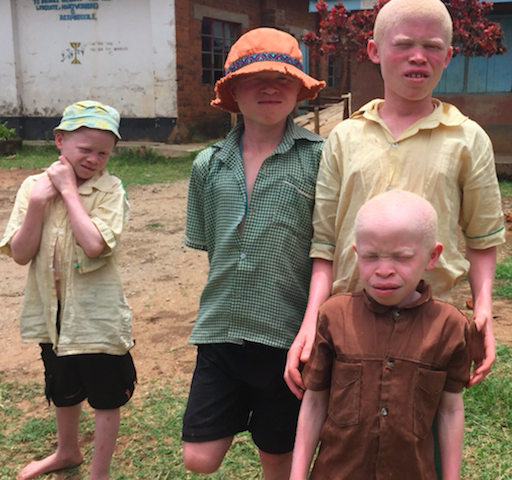
The leadership of the TBRAs also organized the “Albinism Awareness Program,” that had been initiated in October 2015 with the help of Jefferson College of Health Sciences in Roanoke.  The program included in 4 health centers with multiple Ugandans with Albinism attending the program.  Delivery of hats, sunglasses, handheld magnifiers, and Albinism handouts were left at the health centers for continued education of the health center staffs and communities. 
Albinism education draws many members at their community Health Center

St. Angela’s Schools

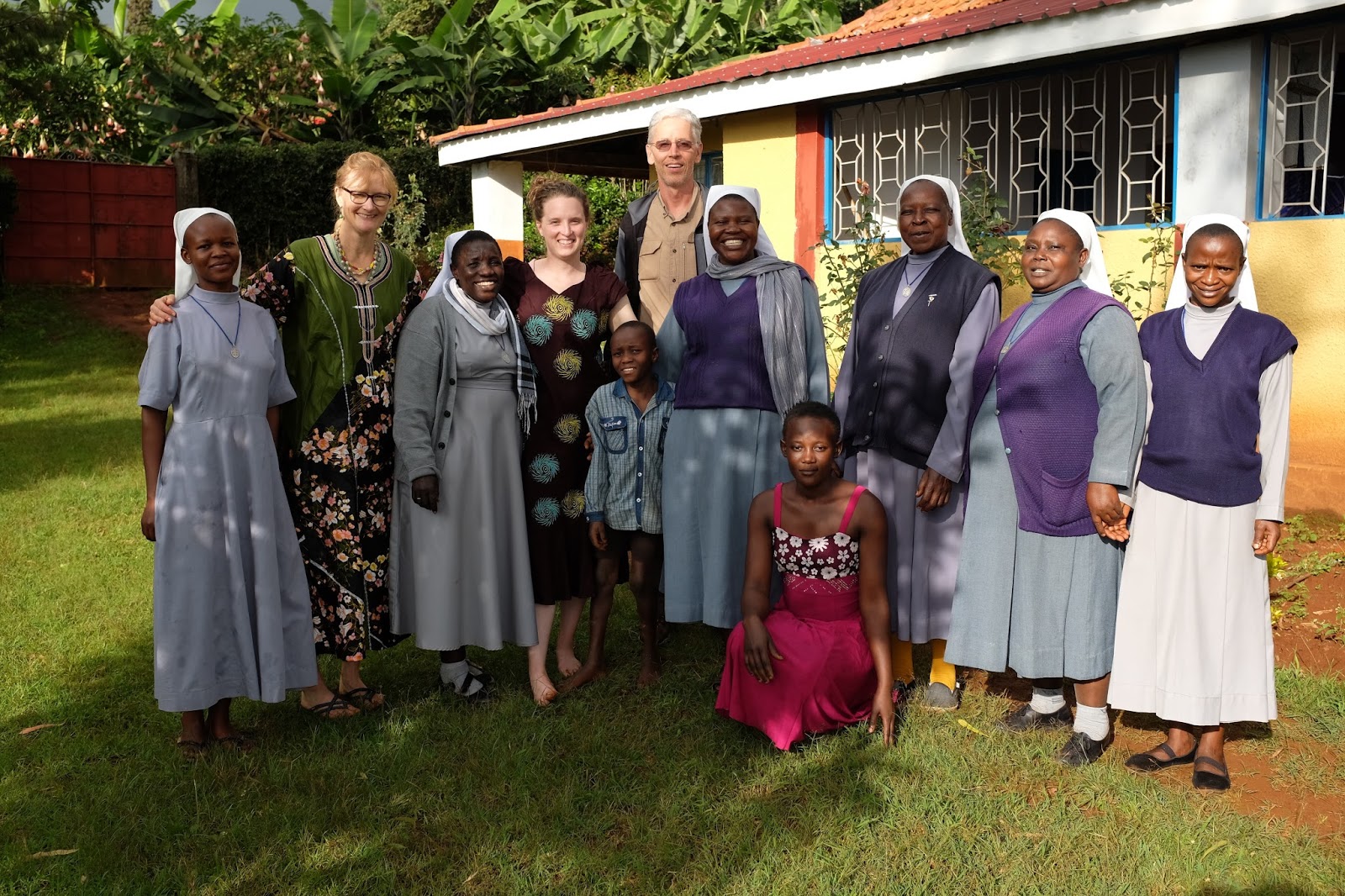
The Older Nuns get fitted for reading glasses at St. Angela's convent in Magale, Uganda

(Above) The reading chart used to help
determine strength for glasses
Vision Project:  This project was also initiated in October 2015 with the PA students from Jefferson College.  The teachers at the school created the “Vision Impairment Committee,” composed of 5 teachers at the primary school.  This most recent trip included a review for the teachers about vision testing for both near and far vision difficulties.  The committee received certificates for being part of the committee along with more glasses for reading and distance vision.  Shortly after the visit with the vision committee, the teachers from the primary school tested teachers in the secondary school and fitted 8 with reading glasses.  More reading  glasses were fitted for the older nuns at the convents and left behind for the program to continue.  Sincere thanks to all of our friends and family who donated glasses for this program.    

(Above)  Sister Claudia uses the chart to determine correct lenses for her older brother, Joseph, and his wife, Olive


Orphan Program At St. Angela's School:  


With the generous donations received during Christmas in December 2015, the headmistress of the school, Sister Claudia, purchased large quantities of rice and beans along with fabric to make uniforms for the many children living at St. Angela’s School.  Sincere thanks to everyone who helped with this program. 


Of note:  Roughly 160 children living at the convent school have little clothing.  The donations for the school uniform project also benefitted the community.  The fabric was purchased in large bulk and local tailors helped with the making of over 100 school uniforms.


Pen Pal Programs:  


One class at St. Angela’s school was delighted to receive pen pal letters and copies of Charlotte’s Web sent by Marcy Wells’ second grade class from Preston Park Elementary school in Roanoke VA. We are returning with letters written by the Ugandan School Children.  Hope they enjoy! 

We are also bringing back letters from 20 High School students in Magale requesting penpals from Roanoke, VA.


Sipi Falls, Uganda

After spending a week in Magale, Uganda, the group traveled to Sipi Falls to present a training program for midwives and birth attendants at the Gamatui Health Center 2.  Billy Wauyo, the representative from “Mercy for Mamas,” traveled from Kampala to present Mama Kits to mothers who attended the trainings and to meet with the GHE travelers to start a collaboration for training programs for mothers, birth attendants, and clinic staff in Uganda.   
  
Billy Wauyo, representative from Mercy for Mamas, presents "Mama Kits" to mothers participating in the GHE training program in Sipi Falls, Uganda


Dr. Mark Gustafson presents the GHE teaching program to the participants at Gamatui HC2 in Sipi Falls, Uganda.


The Sipi Falls Convent hosted the team for 2 nights.  In addition, one evening was spent with Sister Claudia’s brother, Joseph, a coffee farmer in Sipi Falls.  Several members of his family traveled to Sipi to share in the authentic Ugandan meal and evening with the representatives from GHE.

Sister Immaculate, the "dancing nun," also head mother of St. Angela's Convent in Magale, Uganda
The generosity and hospitality of the Ugandan people is truly remarkable.  This was my 8th trip to Uganda and it felt like coming home.  Again we were fortunate to be hosted by the nuns in convents near 2 health centers.  This association with the convents has provided us with safe food and lodging, a convenient place to stay in close proximity to the health centers, the benefit of learning the culture first hand, and most importantly making us feel appreciated and loved. The nuns living and working at the convents, schools, and associated health clinics devote their lives to caring for their community and visitors regardless of religious beliefs or affiliations.   Their ability to laugh, sing, and dance despite their challenging conditions is always an inspiration.

Sincerest gratitude to all those who make GHE possible,
Love to all who make this possible,
Judy

Judy Gustafson MD, MPH
Program Director
Global Health Educators


Tuesday, January 12, 2016

Letter from Sister Claudia Chebet - Uganda January 11, 2016

Dear Dr. Judy, I hope everyone is doing well. We too are fine. Thank you very much for loving me and I really do not know how I can pay you for that but all my prayers are for all of you. I have today bought material in process to make. Am sure they will be ready by the time you come. Attached are the receipt and photos of my accident. The receipt for the bought food and photos will be sent later. I just forgot them at home when I came to town. I am very appreciative to you all for your love, care and concern for us especially the children under my care.May God reward you abundantly.
All the best and my regards to all those who made donations.
Sr. Claudia

Everyone,

I wanted to share this letter with you from Sister Claudia after sending her the money that was raised at Christmas. In addition to the money for food, I sent money specifically designated for 150 school uniforms.   What the money did was affect multiple aspects of the community including:  
1. Paying the cloth makers and farmers (who grew the rice and beans)
2. Paying the seamstresses who will make the school uniforms
3. School uniforms for the children who have little or no clothing when they come to school
4.  Which in turn improves self esteem for the children - no children are singled out due to their lack of school clothes - also better nutrition with more food allowance
5. and finally allowing improved learning for the children and better economy for the local community.

I strongly believed that aid can be given carefully to ensure that more than just a few people can prosper (and others will not be hurt in the process) - rather than sending clothing and food directly.  Luckily, there are people like the Nuns in Uganda who can provide a conduit for donations to ensure that the money goes to help the people for which it is intended.


The photo of the overturned minibus is when she was traveling to town about a month ago.  There were about 12 people on the bus, including Sister Claudia. Luckily no one died but it sounds like she had several fractured ribs.  Unfortunately, Internet access and shopping is about 2 hours away on a public bus that is generally overcrowded.  She takes this trip two or three times a month.  (Incidentally, we gave Sister Claudia a digital camera one year ago and she now documents everything!)

Thank you again for being so supportive of this program.
Sincerely,
Judy

Sunday, November 22, 2015

Accountability

Just a quick note to let you know how much your help is appreciated over this last year.  The interest, collection of supplies, and financial donations have been greater than I ever expected and reminds me how much kindness is in everyone and how much we all care about humanity.  

I do feel compelled to say a word about accountability and how money and supplies are being
Kristine Mighion MD, MBA and James Drougas MD  April 2015
tracked.  First, all donations go into a joint account with myself and Kristine Mighion MD, MBA (Dr. Drougas’ cousin) who donates her time in accounting for all donations.  (All donations are tax deductible through the corporation’s 501c3. ) We are working Magale, Uganda with a clinic/school with convent oversight expressly because the nuns are committed to community service and are obsessive about their accounting of financials, supplies, and manpower.  


Below is a copy of Sister Claudia’s response to my inquiry of how the donations for St. Angela’s Student Orphan program will be used and documented.  

“ I really appreciate all your efforts for the good of the children under my care and for my appostolate too.  I am very happy with my phone and I will keep learning slowly how to use. It is unfortunate that we did not have power to charge phones for the last three days.  I want to thank you once again for getting us more people to support the children and school. I think what we provide mostly is food and it is not all that expensive. It is kind of you to bring us the mentioned items in fact we are grateful. 

The money for the orphans is to cater for the feeding, medical care, boarding i.e water bills, electricity, workers wage i.e cooks, matrons,secretary, bursar /accountant, watchmen to mention but a few. In case a few are sponsored I will use the money to benefit all the children but give receipts and accountability. You should not get worried at all just send me the message on phone and I will be able to do the needful. It would also be good for you to give the dates that you think you will come so that we are able to draw a working program that can not interfere with any other program.

 I also would like to confirm to you that  I am very economical as far as spending is concerned. Sr. Immaculate and I discussed on how we should build a small room for our computers to start a cafe and also to complete the two remaining rooms in the old house. Sr. Immaculate is very happy to work with me and she really trusts me. I must tell you that we sold two of our cows to solicit funds for the same. We cannot misuse the money yet there are other pressing needs for the community.
All the best dear and love to all especially your better half  Dr. mark.
Sr. Claudia”
Sister Claudia with Scovia, one of the blind children.  Her biography is below

The phone she is referring to is an iPhone donated by Charlie Sturm.  The computers were also a donation and the nuns are hoping to start an Internet Cafe to help generate local revenue.   We also gave Sister Claudia a digital camera in April 2015 which she uses to photo document the purchases for the school.  Below are the photos of the mosquito netting purchased with a generous donation by Deborah Edwards prior to our trip in October.


Stories of the children who will be directly benefiting from the Orphan donation program are noted on the website that is devoted to the Orphans and children with albinism.  Sister Claudia took a photo of each child and attached the photo to St. Angela's letterhead with a handwritten note that describes each child's story in brief.  I have included just a few of these stories in this newsletter.  Please note that the only difference in website names is .com for the school and .org for the general program. 

St. Angela’s School:      www.globalhealtheducators.com
For the Global Health Educators General Site:   www.globalhealtheducators.org

Thank you again for all your help!! 
Judy


Wednesday, November 11, 2015

Global Health Educators November Newsletter: Summary of Uganda trip: Oct 16-31, 2015

Global Health Educators spent two weeks in Uganda with a great team of people including 4 students from the Physician Assistants Program at Jefferson College of Health Sciences, Brian Bixler, Brittany Krantz, Shayla Fawcett, and Joshua Brima along with their director, Wilton  Kennedy, DHSc., PA-C.  Other travelers included Stephen Hill MD, Susan Hill RN, CRNA, Mark and Judy Gustafson MD, MPH.  A HUGE thanks goes out to Maegan Hubbard Gahima and her husband, Dr. Emmanuel Gahima who are currently living in Uganda.  They were instrumental in helping to organize supplies, transportation, and logistics prior to our arrival in Uganda.

Brian Bixler and two young students at St. Angela's School
Summary of Projects

Albinism

More than 30 children and adults with albinism live in the Magale area.   A great deal of misunderstanding has resulted in tragedy and early death for many of these people with albinism.  
Joshua Brima gives out hats and sunglasses
GHE's Albinism project, led by Joshua Brima, included educational sessions with the teachers at St Angela’s School, traditional birth referral agents, St. Angela’s Convent nuns, and St. Angela’s health center staff.  The sessions were very successful with excellent prospects for continuity and outreach programs extending into the surrounding communities.  Patrick, a leader of the TBRA program, volunteered to help spread the information throughout the community and brought his neighbor’s affected child to receive a hat and sunglasses from our albinism program director, Joshua Brima.  


The Vision Pilot Project

St. Angela’s School has an enrollment of 750 children, none of whom wear glasses.  The vision pilot project was designed to instruct teachers how to identify children with vision impairment and correct their vision with immediately adjustable lenses purchased at a reduced cost from the Adlens company.  

Annette, a teacher at St. Angela's
Brian Bixler led the program in which four teachers at St. Angela's School volunteered to be “champions” of the vision program and were instructed on how to perform a basic vision exam and to assess for refractory error.  Out of an initial thirty students screened, five children were successfully fitted with glasses achieving near 20/20 vision.  More importantly, these teachers will continue to do vision assessments, fit glasses and plan to update us on their progress in the coming months.   Since people with albinism have visual problems that may not be correctable with glasses, we will be looking at other options including magnifying lenses.  
Newly trained teachers make vision adjustments with Adlens Glasses

Maternal Health - Antenatal Clinic and Labor/Delivery Ward at Magale HC4. 

A new mother and her newborn
Postpartum bleeding and eclampsia are leading causes of death for pregnant women in Uganda.  For this reason GHE conducts maternal health training programs to the staff at Magale HC4.  Eight midwives attended the educational program led by Dr. Mark Gustafson and Shayla Fawcett.  The program included scenario based discussions and reviews of treatment options for postpartum hemorrhage and eclampsia.  This interactive approach helped the GHE team better understand the local approach to these dangerous medical emergencies.  Management algorithm charts and permanent blood pressure monitors were mounted in the labor and delivery area.


Newborn Health - Resuscitation and Infant Warming Programs

Newborns, especially low birthweight infants, are unable to regulate their body temperature and are at great risk of hypothermia, one of the leading causes of infant mortality in developing countries. This is especially true during the cooler, rainy season in Eastern Uganda.  The Newborn Warming Pilot Project was aimed at increasing awareness as well as encouraging  temperature monitoring of the newborn.  
Shayla and Brittany with Newborn

Warming Program:
Brittany Krantz and Shayla Fawcett provided education for clinical staff and traditional birth attendants on the importance of temperature regulation.  A “Thermospot” crystalline thermometer that changes color according to temperature was used on each newborn delivered at the clinic.  Charts were mounted on the walls next to patient’s beds showing how to “read” the infant’s temperature based on color changes.  Finally, each mother was given a hat and blanket as a reminder of the importance of keeping their babies warm.  A special thanks to all the women at home in the US who supplied all the hats and blankets.   


Newborn Resuscitation:
Susan Hill teaching Newborn Resuscitation

Due to the delay in seeking medical care for labor and delivery, many babies that are born at the health center require aggressive resuscitation including bag/mask ventilation.  Susan Hill CRNA, RN presented newborn resuscitation instruction to midwives and medical staff at Magale HC4 as well as to midwives from surrounding health centers attending the training programs.


TBRA (Traditional Birth Referral Agent) program

The maternal and infant mortality rate is 10 times greater than in the US.  Of note, more than 50% of mothers still deliver outside the Ugandan Health Centers with the assistance of men and women with little or no medical training who are referred to as “Traditional Birth Attendants.”  

TBRA Leader, Patrick Kimuku, presents the uniforms/t-shirts
 The TBRA program was begun by Ugandan traditional birth attendants and midwives who attended the original focus groups at Magale HC4 in 2014 hosted by Global Health Educators and led by Anna Gustafson Fausnacht, MPH.  The Ugandan leaders of the association wanted to help improve maternal and newborn health in Eastern Uganda by organizing an association that would include all Ugandans in the surrounding communities who assist local women during their pregnancy, labor, and delivery.  Over an 18 month period since the original focus group, the number of registered TBRAs has grown to over 390 active members in the Manafwa District.  They are currently in the process of applying for a recognized status as a Community Based Organization in the Manafwa District of Uganda.

Susan Hill is being escorted into to Bunambale HC3
The emphasis for this October trip was on the leadership of their new organization.   Educational materials were developed by Global Health Educators with specific topics identified as most critical by the TBRA leadership.  These topics will be presented to TBRAs at the 13 surrounding health centers in the Manafwa District by the leaders of the TBRA program. 

Our last day in Eastern Uganda was spent  traveling to 6 of the more distant health centers to meet the medical staff and their associated TBRAs.  The green TBRA t-shirts and certificates were presented to the most active TBRA members.   

Surgery/Anesthesia

Dr. Hill, Brian Bixler, and Dr. Maria
Twenty-six surgical cases were done in the surgical suite including emergency cesarean sections, hernia repairs, and hysterectomies.  Steve Hill, MD and Mark Gustafson MD, provided surgical mentoring with the assistance of the Physician Assistant students of Jefferson College of Health Sciences who also traveled from Roanoke.  Susan Hill, RN, CRNA, provided anesthesia care and mentoring for the anesthesia staff.  Donations from Global Links provided suture supplies and Al Strickler provided the electrocautery equipment from ERBE.  Maegan 
Hubbard Gahima and Dr. Emma Gahima arranged the delivery of     a new operating table and fresh oxygen tanks!

Ultrasound Program

Dr. Gustafson evaluates an abdominal mass
Sonosite Soundcaring program provided an ultrasound for the trip that proved to be very beneficial in helping to rapidly diagnosis medical and surgical conditions.  The ultrasound was used on several patients in the clinic.  The most notable cases included the diagnosis of large uterine fibroids (leading to an abdominal hysterectomy), an abdominal seroma, and the evaluation of pelvic pain.  A crowdsharing program, GoFundMe, is currently underway to purchase an ultrasound machine for Magale, HC4.  Thanks to Marguerite Underwood of Carilion Clinic for helping this program become a reality.


Orphan Students at St. Angela’s School

Orphan Students at St. Angela's
Sister Claudia Chebet is the Head Mistress of St. Angela’s School that educates 750 students in the Magale area.  The school teaches day students, handicapped children, and boarding students, 70 of which are orphans. Tuition/board for each child costs the convent  $23 per month.  The school does not receive nearly enough in subsidies and donations to educate, feed, and clothe the orphans living at the school.  A program is being developed, in conjunction with Christine Mighion of GHE, to help with these challenges.  Sister Claudia has created a brief biography, with pictures, of each of the 70 orphans living at St. Angela’s.


St. Angela’s Convent Receives a Refrigerator

Sister Claudia and Sister Helen with their refrigerator 


A big thanks to Dr. Dallas Crickenburger who, after learning of the lack of refrigeration at the convent in Magale, had a refrigerator delivered  to the convent prior to our visit, with the assistance of Professor Wilton Kennedy, Maegan and Emma Gahima. 


Pen Pals from Roanoke to Uganda


Marcy Wells’ second grade class in Roanoke, Preston Park Elementary, sent gifts and letters to the Ugandan Students at St. Angela’s School (Left).  


Wilton Kennedy frightens/delights the children with puppet gifts sent from the US (photo right).

A New Birth Attendant Educational Program Begins in Sipi Falls, Uganda

The Sipi Falls Convent
Multiple convents with associated health centers are scattered throughout Uganda. This has resulted in requests for medical educational programs outside of the Magale Health Center/Manafwa District to other needy areas in Uganda.

Mark, Judy, Brittany, and Shayla traveled to Sipi Falls where 26 Traditional Birth Attendants gathered at the Sipi Falls Health Center 2.  A focus group was conducted and films on the birthing process, clean delivery practices, and newborn care were viewed and discussed.  A demonstration on management of the newborn and newborn airway management was conducted with a very active question and answer session.  At the end of the program, the Traditional Birth Attendants chose leaders who would mobilize the birth attendants to conduct regular meetings and discuss safe birth and referral practices.  Our appreciation to the Sipi Falls Convent and Parish for providing lodging and dinner for the entire group.
Sister Claudia (left) helped to organize the first gathering of Traditional Birth Attendants at Sipi Falls HC 2.
Dr. Mark Gustafson leads the focus group and subsequent trainings.

Thanks to all the people both here in the U.S. and Uganda for making this such a successful trip.   Special thanks to the Ugandan nuns who have an organized network throughout Uganda with their associated health centers.   This allows for visitor safe lodging, good food, and health facilities that ensure the security of medical supplies. 

We are looking forward to the next trip planned for the Spring of 2016.   

More information to be added to the Global Health Educators Website:


Tuesday, September 22, 2015

St. Angela's School Projects: 700 students - 50 orphans - 35 children in the community with Albinism

Community and School Projects Planned for October 2015 Visit to Uganda


A registered nonprofit 501c3
All donations are tax deductible


1. Vision Project:
Currently, no student wears eyeglasses.  Teachers will be taught how to check vision and adjustable glasses are being taken to fit students with immediate eyewear purchased through adlens.com. 

2. Students with Albinism:  
There are roughly 35 children with albinism with the majority as orphans in St. Angela’s School.  They suffer from severe light sensitivity with skin cancers developing in their teens resulting in death in their 20’s from preventable skin cancers.  If that is not enough, children with albinism are kidnapped  and body parts sold for witchcraft.  The program to be implemented with this visit will include teaching to teachers, community leaders, and medical staff.  Photos - Children with albinism and 20 year-old boy with painful facial skin cancers and secondary abscesses.  He subsequently committed suicide shortly after this photo was taken in April 2015.


3.  Student Orphan sponsorship program:
There are 60 orphans boarding at the school.  Nuns have asked for a program to help pay for the cost of taking care of these kids.  Plan during the next trip is to obtain a photo and attached biography for each child needing sponsorship.   900,000 shillings/year  ($23/month).  Photo - Greeting by orphans and boarding students at St. Angela’s School.


4.  Sipi Falls Convent Visit
GHE has been asked to expand trainings to another health center associated with another Ugandan Convent in Sipi Falls (the home of Sister Claudia Chebet who runs the Convent at Magale).
2 days will be allowed at the end of the October trip for new site assessment and trainings.

Please contact me with any questions or suggestions!

Judy

A registered nonprofit 501c3
All donations are tax deductible